
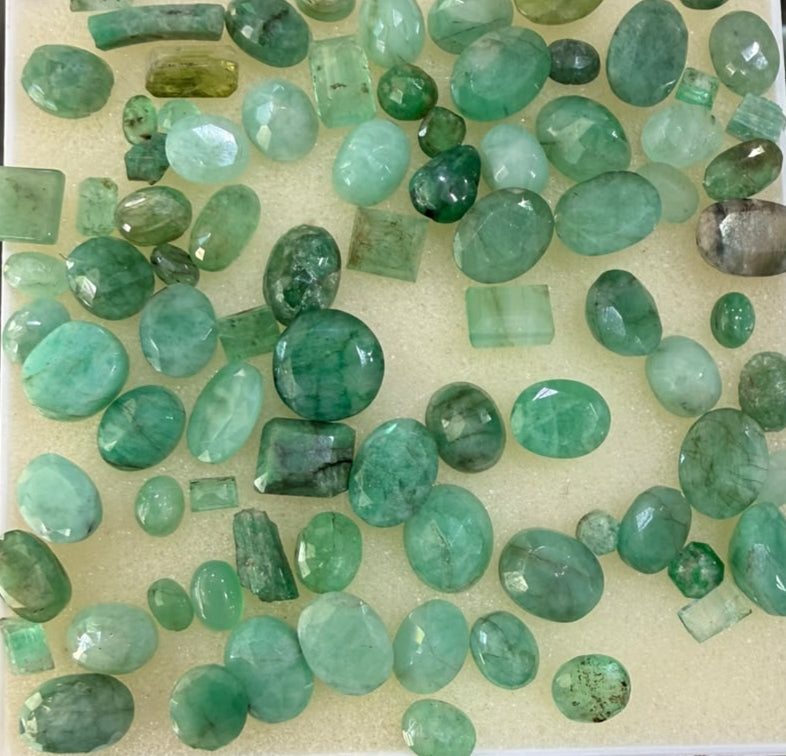
Emerald (Zamrud) Stone In Pakistan
10 customers are viewing this product 👁️
Emerald (Zamrud) Stone In Pakistan
Emerald is a precious gemstone belonging to the beryl mineral family. Its rich green color is caused primarily by trace amounts of chromium and sometimes vanadium. Emerald has been treasured since ancient times for its vivid color and rarity, and it is considered one of the “Big Three” gemstones alongside ruby and sapphire.
Emerald is relatively softer than sapphire and ruby, with a Mohs hardness of 7.5–8, but it is often more included (has internal fractures), which makes fine-quality transparent stones especially valuable.
Color
Emerald is known for its iconic green shades, including:
Light Green
Medium Green
Vivid Green
Bluish Green
Deep Forest Green
The most valuable emeralds display a rich, saturated green with slightly bluish undertones, excellent transparency, and balanced tone (not too dark or too pale).
Description
Emeralds are famous for their “jardin” (French for garden), which refers to natural internal inclusions. These inclusions are common and accepted in emeralds as part of their natural character. Most emeralds are treated with oils or resins to improve clarity and appearance.
Despite inclusions, high-quality emeralds are highly valued due to their intense color and rarity in fine, clean crystals.
Physical Properties
Mineral Family: Beryl
Chemical Composition: Beryllium Aluminum Silicate (Be₃Al₂Si₆O₁₈)
Color: Green to bluish green
Hardness: 7.5–8 on the Mohs scale
Luster: Vitreous
Transparency: Transparent to heavily included
Refractive Index: 1.56–1.60
Specific Gravity: 2.67–2.78
Availability (1 Carat and Above)
Emeralds are widely available in different sizes, but fine-quality stones become rare as size increases:
1–2 ct: Common in commercial quality
2–5 ct: Available, moderate rarity for fine clarity
5–10 ct: Less common in high quality
10 ct and above: Rare, especially with good clarity and vivid color
Quality Factors
The value of emerald depends on:
Deep, vivid green color
Even saturation and tone
Transparency (lower inclusions increase value)
Cut quality (often rectangular “emerald cut”)
Minimal visible fractures
Origin and treatments (oiling is common)
Uses
Emerald is widely used in:
Rings
Necklaces and pendants
Earrings
Luxury and high-end jewelry
Collector gemstones
Major Sources
Notable emerald-producing regions include:
Colombia (world’s most famous source for fine emeralds)
Zambia
Brazil
Afghanistan
Pakistan
Ethiopia
Emerald remains one of the most admired gemstones in the world due to its intense green color, historical prestige, and natural rarity in fine transparent crystals. Its beauty makes it highly desirable in both classic and modern jewelry designs.


